Suspension, Steering and Wheel Alignment in Gladstone
Suspension and steering repairs · Cars, 4WDs and work vehicles
Clunks, wander or vibration? Let’s find out why.
A vehicle that knocks over bumps, pulls under braking or needs constant steering correction deserves a proper inspection. Total Mobile Mechanical Services diagnoses suspension and steering faults for Gladstone, Calliope and surrounds, with workshop repairs, tyres and advanced 3D wheel alignment coordinated through one team.
Call 0456 765 135 to book a suspension, steering or clunk investigation. Our main workshop is at 6 Wright Road, Calliope QLD 4680.
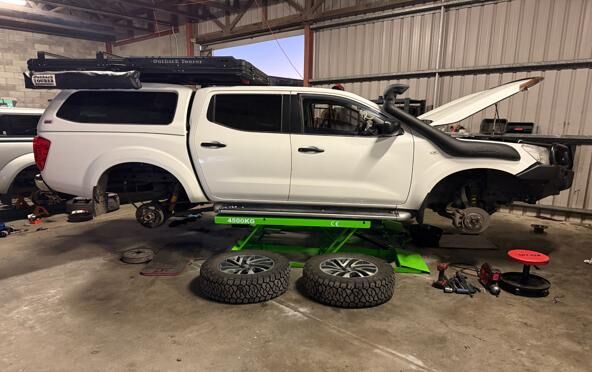
Inside our Calliope workshop.
Connected causes checked together
Workshop hoists and loaded inspections
Repairs, tyres and 3D alignment
Get the handling problem understood
We inspect and repair suspension and steering concerns in cars, 4WDs, utes, vans and light commercial vehicles. The work follows the symptoms and component condition, including movement that only appears when the vehicle is loaded, braking or accelerating.
Shocks, struts and mounts
Inspect shock absorbers, struts, strut-top mounts and bearings, shock bushes and suspension mounts. Excessive bounce, nose-diving, body roll, knocking or poor stability can indicate a problem. Damping can deteriorate without a large visible leak, so appearance alone does not settle the diagnosis.
Arms, bushes and ball joints
Check control arms, radius arms, bushes and ball joints for wear and unwanted movement. These components locate the wheels while allowing controlled suspension travel. Movement under braking, cornering or acceleration can affect steering feel, tyre wear and the vehicle's stability.
Springs and suspension hardware
Assess coil and leaf springs, shackles, spring bushes, sway-bar links and bushes, bump stops and associated mounts. Uneven ride height, knocking, excessive roll or contact under load can involve several parts, so the vehicle's stance and normal use are considered together.
Steering and assistance faults
Investigate tie-rod ends, racks and mounts, linkages, steering-column and intermediate-shaft joints. Hydraulic leaks, hoses and connections are checked where relevant. Heavy, loose or inconsistent steering and electric power-steering warnings may require mechanical and electronic testing.
Investigate humming, growling, wheel movement and vibration involving bearings, hubs and related wheel-end components. Tyre noise can sound similar to a worn bearing. Inspection and road testing where appropriate help separate tyre, hub and driveline causes before repairs are recommended.
Tyres, balance and alignment
Consider tyre condition, pressures, wear patterns and wheel balance alongside the suspension. Tyre fitting, balancing and advanced 3D wheel alignment are available. Loose, bent or worn mechanical components need attention before the final alignment can finish the job properly.
A useful inspection goes beyond the first worn bush
Check how the parts behave under load
Some faults are obvious with the vehicle raised. Others only show themselves when the suspension carries vehicle weight, the steering is turned or braking and acceleration apply force. A cracked-looking bush may be part of the picture without explaining the original noise. Workshop hoists and suitable loaded checks help us assess the movement involved.
Depending on the complaint, inspection can cover tyre pressures and wear, joints, bushes, mounts, springs, shocks, rack movement, wheel bearings and hubs. We also consider underbody or exhaust contact, brake components and the driveline. A road test may be used where safe and appropriate to connect what we find in the workshop with what you feel on the road.
Give an intermittent clunk some context
A knock may appear over one sort of bump, while reversing or only during acceleration. Control-arm and radius-arm bushes, ball joints, sway-bar links, strut tops, shock bushes and steering-rack mounts are possible sources. Engine or transmission mounts, CV joints, loose brake components, exhaust contact and wheel-bearing movement can produce similar sensations.
A clunk under acceleration may occur because engine or driveline torque moves a mount or arm in a direction a basic static inspection does not reproduce. Tell us the speed, load and manoeuvre that bring it on. Recent tyre, suspension or driveline work is useful context too, especially if the symptom started immediately afterwards.
Shock absorbers and struts control suspension movement and help keep tyres in contact with the road. Poor damping can contribute to bouncing after bumps, reduced control on rough surfaces, body roll, nose-diving under brakes and uneven tyre wear. Towing may make the loss of control more noticeable.
A leaking shock is one clue, but an absence of oil on the outside does not prove the unit is working well. We consider damping alongside springs, mounts, bushes, tyre condition and vehicle use. Worn shock mounts or bushes can also produce a knock that needs to be distinguished from the damper itself.
Bushes and joints influence the wheel's position
Bushes need to allow controlled movement while keeping the suspension correctly located. As they split, soften or wear, a wheel can shift during braking, cornering or acceleration. That can lead to clunks, steering wander, tyre wear, changing alignment or instability under braking.
Control arms and radius arms may carry several bushes and joints. Replacing one without checking the remaining movement can leave the same complaint unresolved. We consider the condition of the connected parts and explain the repair priorities before additional work is authorised.
Steering feel, bearing noise and warning lights
Steering problems can be mechanical, hydraulic or electronic. A heavy wheel, inconsistent assistance or noise while turning may need checks of rack mounts, joints, hoses, hydraulic leaks or the electric steering system. A warning light can call for electronic testing alongside the physical inspection.
Wheel-bearing wear can affect steering feel, braking, alignment and tyre wear as well as making noise. Humming that increases with road speed, a growl that changes while cornering, looseness or vibration are useful symptoms to report. On some vehicles, a hub or bearing concern can also be associated with an ABS or wheel-speed-sensor fault.
Repair the mechanical wear before the final alignment
Uneven tyre wear does not automatically mean an alignment is the only work needed. Incorrect pressures, worn shocks, bushes or ball joints, bearing movement, ride-height changes, bent parts and tyre balance or construction can also contribute. An alignment cannot compensate for a loose joint or moving hub.
Pulling or shuddering under braking can overlap with those handling concerns. Brake drag, unequal braking force, worn bushes and tyre differences can feel similar from the driver's seat. We consider brake-system testing where stopping performance is involved, then arrange the relevant mechanical repairs and final 3D alignment in the right order.
Work utes and tow vehicles may carry more weight and operate on tougher roads than an unloaded passenger car. Suspension condition affects ride height, steering geometry, tyre clearance, braking stability, towing control, shock travel and tyre wear. Tell us about the accessories, load and trailer normally attached to the vehicle.
Springs should be selected with normal operating load and ride requirements in mind, rather than only the heaviest load carried once. We can assess standard repairs or suitable upgrade requirements for your use. Suspension upgrades and touring preparation are available through our 4WD upgrades service.
A sudden change in handling needs prompt attention
Severe steering looseness, sudden loss of assistance, a wheel at an unusual angle, significant bearing movement, a part contacting a tyre or major power-steering fluid loss can make the vehicle unsafe. Strong pulling, sudden instability or a loud knock accompanied by changed handling also needs urgent assessment. Stop safely and avoid continued driving if control is affected.
Call to discuss the next step if the vehicle cannot be driven safely. Suitable mobile and breakdown support depends on location, safe access, technician availability and whether the work can be completed on site. Involved suspension and steering repairs are handled in the workshop.
A clear path from complaint to repair
Describe the symptom
Call 0456 765 135 with the vehicle, where the noise seems to come from and when it occurs. Include recent repairs, tyre work and normal towing or load.
Investigate the cause
We inspect connected steering, suspension, wheel-end and tyre components, using loaded checks or a road test where safe and appropriate. Findings and proposed repairs are explained.
Repair, then align where required
Authorised mechanical repairs come first. Relevant alignment work follows, with any further maintenance findings explained so you understand the next priorities for the vehicle.
Gladstone, Calliope and surrounds.
Suspension and steering repairs for Gladstone, Calliope and surrounds, including Boyne Island, Tannum Sands, Mount Larcom, Benaraby and Miriam Vale. Our main workshop is at 6 Wright Road, Calliope QLD 4680, with hoists, tyre fitting, balancing and advanced 3D wheel alignment available through the same team.
Should I have an alignment before replacing worn suspension parts?
Loose or damaged steering and suspension components should be repaired before the final alignment. Otherwise the movement can prevent the settings from holding as intended.
Why does a clunk happen only under acceleration?
Engine or driveline load can move a bush, mount, control arm or driveline component differently from a static inspection. Describe the conditions that reproduce it so the investigation can focus on that behaviour.
Can worn suspension cause uneven tyre wear?
Yes. Worn bushes, ball joints, shocks, wheel bearings and ride-height changes can contribute. Tyre pressures and alignment also need consideration.
Can you investigate steering-wheel vibration?
Yes. Tyres, balance, bearings, steering, suspension, brakes and driveline components can all be involved. When the vibration appears helps guide the inspection.
Get the clunk checked. Get the handling understood.
Call Total Mobile Mechanical Services on 0456 765 135 to book suspension or steering diagnosis. Tell us what the vehicle does, when it happens and how you use it, and we will help arrange the inspection.