Brake Repairs Gladstone & Calliope | Cars, 4WDs
Hearing brake noise, feeling vibration through the pedal or noticing the clutch slipping under load? Total Mobile Mechanical Services provides brake and clutch diagnosis, repairs and replacement for cars, 4WDs, utes, vans and light commercial vehicles across Gladstone, Calliope, Boyne Island, Tannum Sands and surrounding areas.
Brake and clutch symptoms should not be diagnosed by guessing which component has failed. Grinding brakes may involve pads, rotors, calipers, hydraulics or wheel-end movement. Difficult gear selection may involve the clutch, flywheel, hydraulics, release system, mounts, linkage or gearbox.
Unlike a narrowly focused repair outlet, our team can assess the connected brake, clutch, hydraulic, driveline, tyre, suspension and electronic systems through one business. This matters when the apparent brake or clutch fault is being caused or worsened by another vehicle system.
Gladstone customers are supported through booked workshop repairs, suitable mobile breakdown assessment and our main workshop at 6 Wright Road, Calliope.
Brake and Clutch Services for Gladstone Vehicles
We work on everyday passenger vehicles, petrol and diesel 4WDs, work utes, towing vehicles, vans and light commercial vehicles.
Our brake and clutch work can include:
- Brake-pad and brake-shoe replacement
- Brake-rotor and drum inspection or replacement
- Brake-noise, vibration and pulling diagnosis
- Brake-caliper and wheel-cylinder repairs
- Master-cylinder and brake-booster diagnosis
- Brake-hose, brake-pipe and hydraulic concerns
- Brake-fluid testing, bleeding and replacement
- Mechanical and electronic parking-brake faults
- ABS, traction-control and wheel-speed-sensor diagnosis
- Clutch-slip, shudder and engagement diagnosis
- Clutch-kit and release-bearing replacement
- Flywheel and dual-mass flywheel assessment
- Clutch master-cylinder and slave-cylinder repairs
- Clutch cable, pedal, linkage and release-system faults
- Suitable clutch upgrades for towing, modified and work vehicles
More detailed service information is available through our dedicated BRAKE REPAIRS and CLUTCH REPAIRS AND UPGRADES pages.
When Should You Stop Driving?
Some brake and clutch symptoms require prompt attention because continued driving can increase the risk of component failure or additional damage.
Stop driving and arrange an assessment when:
- The brake pedal sinks toward the floor
- Braking performance has reduced significantly
- The vehicle pulls sharply during braking
- Brake fluid is visibly leaking
- A wheel becomes excessively hot or produces smoke
- Grinding occurs whenever the brakes are applied
- The clutch will not disengage
- The vehicle will not select or remain in gear
- The clutch is slipping severely and the vehicle is losing drive
- A burning smell continues after normal driving
Do not continue driving merely because the vehicle still moves. Brake faults can worsen quickly, and a severely slipping clutch can overheat and damage the flywheel or leave the vehicle unable to move.
Brake Repairs and Complete Brake-System Diagnosis
Brake pads are only one part of the braking system. Safe, consistent braking also depends on rotors or drums, calipers, wheel cylinders, hydraulic components, wheel bearings, tyres, suspension and electronic control systems.
Brake concerns may include:
- Squealing, scraping or grinding noises
- Vibration through the brake pedal or steering wheel
- The vehicle pulling to one side when braking
- A soft, low, hard or sinking brake pedal
- Longer stopping distances
- Brake, ABS or stability-control warning lights
- Excessive heat or a burning smell near a wheel
- Visible brake-fluid leakage
- Uneven or rapid brake-pad wear
- A parking brake that does not hold correctly
Replacing pads without assessing damaged, undersize or unevenly worn rotors can lead to poor braking, noise or rapid repeat wear. Caliper operation, hydraulic condition, tyre condition and wheel-end movement must also be considered.
Brake rotors are checked for condition, wear and suitability. Whether a rotor can remain in service depends on its measurements, damage, heat condition, wear pattern and the vehicle manufacturer’s limits.
Brake Hydraulics, Boosters, Hoses and Parking Brakes
Not every brake fault is caused by worn pads or rotors. Poor pedal feel, uneven braking or fluid loss may involve the master cylinder, brake booster, vacuum supply, calipers, wheel cylinders, flexible hoses, steel pipes or parking-brake system.
Depending on the vehicle and confirmed fault, work may include:
- Master-cylinder diagnosis and replacement
- Brake-booster and vacuum-assistance diagnosis
- Vacuum-pump and related supply concerns
- Brake-hose inspection and replacement
- Accessible steel brake-pipe inspection and repair pathways
- Brake-fluid testing, bleeding and replacement
- Caliper-slide, piston and seizure concerns
- Wheel-cylinder and drum-brake repairs
- Drum-brake springs, adjusters and hardware
- Mechanical handbrake cables and mechanisms
- Electronic parking-brake diagnosis and service procedures
- Brake-pad wear-sensor diagnosis and replacement
A brake-fluid leak or sinking pedal should be treated as a serious fault. Topping up the reservoir does not repair the leak or confirm that the braking system is safe.
ABS, Traction-Control and Electronic Brake Faults
Modern braking systems interact with wheel-speed sensors, steering-angle information, stability control, traction control, wiring, control modules and hydraulic components.
An ABS warning light does not automatically mean the ABS control module has failed. Possible causes include:
- Wheel-speed sensor faults
- Damaged wiring or connectors
- Wheel-bearing movement
- Damaged or contaminated tone rings
- Power-supply or earth faults
- Low system voltage
- Hydraulic or mechanical brake problems
- Communication faults between control modules
Scan-tool fault codes identify where testing should begin; they do not automatically prove which part needs replacing. Fault codes should be considered with live data, electrical testing and mechanical inspection.
Electrical and warning-light concerns are supported through our VEHICLE DIAGNOSTICS AND FAULT-FINDING service.
Clutch Diagnosis, Replacement and Repair
A clutch that slips, shudders or fails to disengage can make a vehicle difficult or unsafe to drive. However, not every gear-selection problem means the clutch itself needs replacement.
Clutch-related symptoms can include:
- Engine speed rising without matching vehicle acceleration
- Clutch shudder when moving away
- Difficulty selecting first gear or reverse
- Grinding during gear selection
- A high, low or changing clutch engagement point
- A soft clutch pedal or a pedal remaining on the floor
- Noise when pressing or releasing the clutch pedal
- A burning smell after towing, hill starts or heavy use
- Visible clutch-fluid loss
- Intermittent clutch operation
External checks and road testing are completed where safe and practical before gearbox removal is authorised. Hydraulic faults, release-system problems, linkage concerns, mounts and gearbox problems can produce symptoms similar to a worn clutch.
A clutch may also slip because of oil contamination, excessive heat, incorrect adjustment or a previous repair problem. The symptoms and available external evidence are considered before major dismantling begins.
Clutch Hydraulics, Cables and Release Systems
Clutch operation may rely on a hydraulic system, a cable, mechanical linkage or a combination of release components.
Depending on the vehicle, related checks may include:
- Clutch master cylinders
- External slave cylinders
- Concentric slave cylinders
- Hydraulic lines, fluid and bleeding
- Clutch cables and adjustment
- Clutch pedal assemblies and bushes
- Release forks and pivot points
- Release bearings and guide components
- Linkages and external gearbox controls
A failed master cylinder, slave cylinder or release component can prevent the clutch from disengaging even when the clutch friction plate itself remains serviceable.
Where the slave cylinder or release bearing is located inside the bellhousing, gearbox removal may be required to confirm and repair the fault.
Clutch Kits, Flywheels and Related Components
A clutch replacement commonly requires more than simply fitting a new friction plate. The pressure plate, release bearing, flywheel, spigot or pilot bearing, hydraulics, seals, mounts and release system may also require assessment.
The flywheel must be inspected when the clutch is removed. Reusing a damaged or unsuitable flywheel can cause:
- Clutch shudder
- Poor or inconsistent engagement
- Noise or vibration
- Premature clutch wear
- Heat damage
- Repeat gearbox removal
Flywheel machining or specialist work may be coordinated where suitable. Some flywheel designs, including certain dual-mass flywheels, may require replacement rather than machining.
Related areas that may be assessed while the gearbox is removed include:
- Engine rear-main-seal area
- Gearbox input-shaft-seal area
- Spigot or pilot bearing
- Engine and gearbox mounts
- Gearbox-oil condition and service requirements
- Accessible linkage and selector components
The final repair scope is based on the vehicle design, measurements, component condition and intended use. Additional work identified after dismantling is explained before proceeding.
Clutch Upgrades for 4WDs, Towing and Work Utes
A heavy-duty clutch is not automatically the correct choice for every vehicle. Increased clamping force or aggressive friction materials can affect pedal effort, engagement behaviour, driveline protection and everyday drivability.
Before recommending an upgrade, we consider:
- Vehicle make, model and engine output
- Standard or modified engine performance
- Towing weight and frequency
- Worksite and off-road use
- Daily driving requirements
- Tyre size and gearing changes
- Existing flywheel design
- Previous clutch failures
The objective is to select a clutch that suits the actual vehicle and use—not simply fit the most aggressive option available.
Broader tow-vehicle preparation can also be completed through our 4WD UPGRADES AND TOWING PREPARATION service.
Brake Upgrades for Towing and Work Vehicles
Towing, repeated heavy braking, additional vehicle weight and worksite operation can increase brake temperatures and accelerate component wear.
Brake upgrade advice may consider:
- The condition of the existing braking system
- Vehicle and towing weights
- Tyre condition and grip
- Suspension condition and load control
- Rotor, pad and fluid requirements
- Trailer-brake condition and controller operation
- How the vehicle is used in normal service
An upgrade does not replace the need to repair worn or faulty components. The standard system must be correctly inspected before changes are recommended.
Brakes, Tyres, Wheel Alignment and Suspension Work Together
Brake vibration, pulling or instability may not be caused by the brakes alone. Tyre condition, wheel alignment, suspension wear, steering movement and wheel-bearing condition can affect how the vehicle behaves under braking.
Connected workshop services include:
- TYRES AND 3D WHEEL ALIGNMENT
- SUSPENSION AND STEERING REPAIRS
- ABS AND VEHICLE DIAGNOSTICS
- AUTOMATIC AND CVT TRANSMISSION SERVICING
Keeping these services within one workshop gives the technician a better opportunity to identify the underlying cause rather than replacing one component and overlooking the connected fault.
Our Brake and Clutch Repair Process
- Initial assessment: We confirm the vehicle, symptoms, warning lights, recent repairs and how the vehicle is used.
- Inspection and diagnosis: The relevant brake, clutch, hydraulic, driveline or electrical systems are checked before major parts are recommended wherever practical.
- Repair scope: We explain the findings, required parts, connected risks and recommended repair pathway.
- Customer approval: Additional repairs are not completed without approval unless another arrangement has already been agreed.
- Repair: The approved components are repaired or replaced using the correct procedure for the vehicle.
- Final checks: The affected system is checked and road tested where safe, legal and appropriate before the vehicle is released.
Some internal clutch or flywheel conditions cannot be fully confirmed until the gearbox has been removed. Where this occurs, the additional findings are explained before the repair scope is expanded.
Brake and Clutch Repairs for Work and Fleet Vehicles
Work utes and fleet vehicles often experience repeated stop-start operation, towing, additional loads, worksites, dust and long regional travel.
These conditions can increase wear on:
- Brake pads, rotors, drums and shoes
- Brake fluid and hydraulic components
- Clutch friction components
- Flywheels and release systems
- Wheel bearings
- Tyres, suspension and driveline components
Businesses operating multiple vehicles can combine brake and clutch repairs with planned FLEET SERVICING, DEFECT TRACKING AND MAINTENANCE.
Workshop Repairs and Mobile Breakdown Support
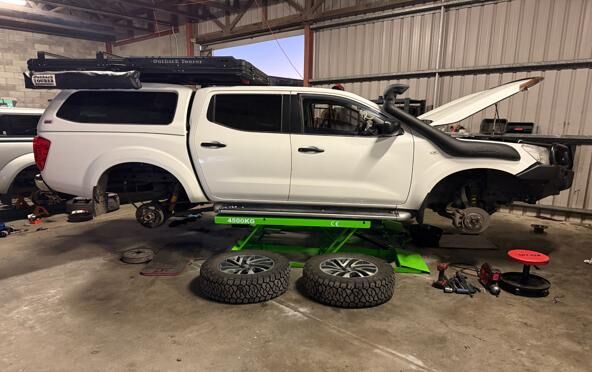
Major brake repairs and clutch replacement normally require workshop lifting equipment, controlled working conditions and access to measuring and diagnostic equipment.
Suitable mobile assistance may be available for an initial breakdown assessment where a brake, clutch, hydraulic or driveline concern prevents the vehicle from being moved safely.
Clutch replacement, gearbox removal, flywheel assessment and major brake work are normally directed to the workshop.
Breakdown calls are accepted 24/7. Attendance depends on technician availability, location, access, safety and the nature of the fault.
Visit our MOBILE MECHANIC AND 24/7 BREAKDOWN SUPPORT page for more information.
Why Choose Total Mobile Mechanical Services?
- Six mechanics with more than 80 years of combined experience
- Petrol and diesel vehicle specialists
- Cars, 4WDs, utes, vans and light commercial vehicles supported
- Brake, clutch, hydraulic and driveline diagnosis through one business
- ABS and auto electrical testing available in-house
- Tyres, advanced 3D wheel alignment and suspension repairs available
- Testing before expensive component replacement wherever practical
- Clear explanations before additional work is authorised
- Workshop repairs backed by suitable mobile and 24/7 breakdown support
- Main workshop at 6 Wright Road, Calliope
Gladstone customers can also review our complete MECHANIC GLADSTONE SERVICES.
Frequently Asked Questions
How much does a brake or clutch repair cost?
The cost depends on the vehicle, confirmed fault, parts required and whether related components such as rotors, calipers, hydraulics, flywheels or release components need attention. We assess the vehicle and explain the repair scope before additional work is authorised.
How long does clutch replacement take?
Repair time varies significantly between vehicles because gearbox removal, four-wheel-drive components, flywheel work, parts availability and related repairs can affect the job. The expected timeframe is discussed after the vehicle and required repair are identified.
Do worn brake pads always require new rotors?
No. Rotor condition, thickness, wear pattern, heat damage and measurements determine whether the rotors remain serviceable or require replacement.
Can you diagnose an ABS warning light?
Yes. Suitable ABS systems can be scanned, and connected sensors, wiring, wheel bearings and mechanical brake components can be assessed.
Can I continue driving with grinding brakes?
Grinding can indicate that the friction material has worn away or that another component is contacting the rotor or drum. Continuing to drive may reduce braking performance and cause further damage. The vehicle should be assessed before further use.
How do I know whether my clutch is slipping?
Engine speed may rise without a matching increase in road speed, particularly during acceleration, towing, hill climbing or higher-gear driving.
Can I continue driving with a slipping clutch?
A slipping clutch can deteriorate rapidly, especially during towing, acceleration or hill climbing. Continued driving can increase heat and damage the clutch or flywheel, and the vehicle may eventually lose drive.
Does every clutch replacement require a new flywheel?
No. The flywheel must be inspected and measured. The correct pathway may involve reuse, suitable machining or replacement depending on its design and condition.
Do you fit upgraded or heavy-duty clutches?
Suitable clutch upgrades can be considered after the vehicle, engine output, towing requirements and everyday driving use are assessed.
Can a hydraulic fault feel like a failed clutch?
Yes. A failed master cylinder, slave cylinder, hydraulic line or release component can prevent the clutch from disengaging correctly.
Can brake or clutch replacement be completed mobile?
Major brake repairs and clutch replacement are normally completed in the workshop because they require controlled lifting, measuring equipment and safe working conditions.
Book Brake or Clutch Repairs in Gladstone
Contact Total Mobile Mechanical Services when you notice brake noise, poor pedal feel, ABS warning lights, clutch slip, shudder, difficult gear selection or clutch-fluid loss.
When booking, tell us:
- The vehicle make, model, year and engine
- Whether the vehicle is petrol or diesel
- The brake or clutch symptoms
- When the problem occurs
- Whether the vehicle is used for towing or heavy work
- Any warning lights currently displayed
- Any recent brake, clutch, gearbox or hydraulic repairs