Radiator and cooling-system repairs · Gladstone, Calliope and surrounds
Running hot? Find the cause.
Coolant disappearing, temperature climbing or overheating when you tow? Total Mobile Mechanical Services investigates cooling-system faults and radiator problems in cars and 4WDs. Get local mechanical and auto-electrical expertise, supported by the Australia-wide Natrad network, with a repair recommendation based on what the testing finds.
Call 0456 765 135 with the vehicle and temperature symptoms. Our main workshop is at 6 Wright Road, Calliope QLD 4680. Stop safely if the vehicle is overheating.
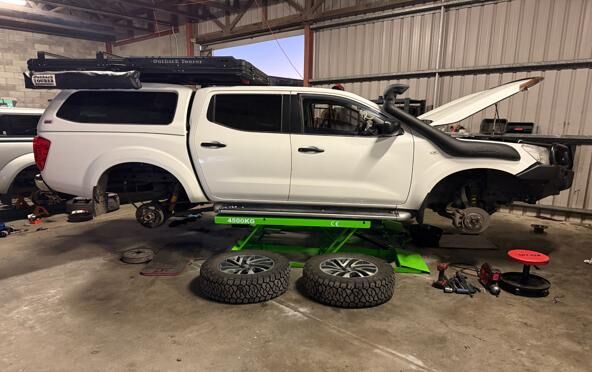
Inside our Calliope workshop.
Local Natrad agent and network support
Cooling and electrical faults investigated together
Repair advice based on testing
Cooling repairs that start with the cause
A temperature warning can involve much more than the radiator. We consider leaks, pressure, coolant flow, airflow, electrical controls and engine condition. The work recommended depends on the vehicle, symptoms and test results.
Pressure testing and coolant leaks
Investigate coolant loss with pressure testing and inspection of hoses, connections, expansion tanks and pressure caps. A visible puddle can help locate a leak; disappearing coolant without an obvious external leak may need a different line of investigation.
Radiator inspection and repairs
Assess radiator condition, damage, restriction and contamination, then explain suitable repair or replacement options. The decision considers the construction and overall condition of the radiator as well as the fault that brought the vehicle into the workshop.
Thermostats and water pumps
Investigate thermostat operation and water-pump concerns where temperature behaviour or inspection findings point to them. Suitable replacement work is available, with related hoses and cooling-system condition considered when planning the repair.
Fans, sensors and wiring
Our qualified auto electrician can test cooling-fan motors, relays, fuses, wiring, sensors and associated controls alongside the mechanical checks. A fan that stays off may have a supply or control fault rather than a failed motor.
Coolant and system bleeding
Check coolant condition, contamination and concerns about an incorrect coolant type. Coolant replacement and appropriate bleeding are available as part of the required work, with the underlying reason for fluid loss or overheating investigated.
Temperature warnings and towing
Investigate temperature-gauge behaviour, warning lights and problems that appear during towing or heavy work. Where findings justify it, the assessment can include combustion-gas concerns or possible internal leakage. Dedicated heavy-vehicle cooling support is also available.
A car that gets hot while sitting in traffic may have a different problem from one that overheats at highway speed or climbing with a trailer. Tell us the operating conditions, whether coolant is escaping and how quickly the temperature changes. Those details help direct the investigation.
Testing can include system pressure, temperature comparisons, coolant and leak evidence, fan operation, electrical measurements and available diagnostic information. If the findings suggest an internal engine concern, further checks may be needed. Repeated top-ups or a new radiator alone will not resolve a fault elsewhere in the system.
Mechanical and electrical work in one workshop
Cooling fans can be controlled by relays, modules, temperature sensors and engine-management commands. A fan that fails to run may have a wiring, power-supply or control issue. Our mechanical team works with a qualified auto electrician to investigate those connected faults.
Workshop facilities support pressure testing, diagnostic checks and controlled repair work. Looking at coolant circulation and electrical operation together helps the team explain which repairs are needed, including when the temperature reading itself needs investigation. You have one local team coordinating the mechanical and electrical sides of the job.
Local cooling expertise with Natrad support
Total Mobile Mechanical Services is a Natrad agent, backed by an established Australia-wide cooling network. That relationship adds supplier and technical network support to our local mechanical and auto-electrical capability for Gladstone, Calliope and surrounds.
The repair recommendation still starts with the vehicle and the test results. Network support helps us organise suitable options; it does not replace fault finding or make a radiator replacement necessary when the problem lies elsewhere.
Repair the radiator or replace it?
Radiator construction, the location of damage, contamination and overall core condition all affect that decision. An isolated repair may be appropriate for one radiator while widespread deterioration makes replacement the more sensible option for another.
We explain the available path after testing and consider related hoses, caps, fans and coolant condition. Addressing the connected fault matters: fitting a replacement radiator into a system with unresolved pressure, airflow or coolant problems can leave you dealing with the same symptoms.
Get the cooling system ready for towing and touring
Towing, soft sand, slow off-road driving and heavy loads increase heat. A system that seems fine on a short town trip may struggle under sustained demand. Explain your normal load, planned trip and when you have noticed temperature changes so the checks reflect how the vehicle is used.
Cooling checks can be combined with scheduled servicing before a longer trip. If an upgrade is being considered, establish the condition of the existing system first. An upgraded component should suit the application, rather than hide an unresolved mechanical or electrical fault.
Stop in a safe place if the gauge enters the hot range, a red temperature warning appears, steam is visible or coolant is rapidly escaping. Continuing to drive can turn a repairable cooling fault into major engine damage.
Do not remove a hot pressure cap. Allow the vehicle to cool and call for advice. Suitable breakdown assessment may be available through our mobile mechanic service; the symptoms, location and work required determine the next step.
From temperature symptoms to a repair plan
Tell us what happened
Call 0456 765 135 with the make, model, temperature behaviour, coolant loss and warning lights. Mention towing, recent repairs or any change in coolant.
Book the investigation
We arrange suitable testing, considering pressure, flow, airflow, electrical controls and the conditions in which the fault appears.
Choose the repair path
We explain the findings and suitable repair or replacement options so you understand what is needed and why before additional work is authorised.
Gladstone, Calliope and surrounds.
Cooling-system and radiator repairs for Gladstone, Calliope and surrounds, including Boyne Island, Tannum Sands, Mount Larcom, Benaraby and Miriam Vale. Our main workshop is at 6 Wright Road, Calliope QLD 4680. If the vehicle is overheating, call before attempting to drive it to the workshop.
Does overheating always mean the radiator needs replacing?
No. Leaks, a thermostat, water pump, fan, pressure cap, electrical fault or internal engine concern can cause similar symptoms. Testing helps establish the repair required.
Can you investigate overheating that only happens while towing?
Yes. Tell us the load, road conditions and when the temperature rises. Cooling performance, airflow, fan operation and mechanical condition can be considered during diagnosis.
Can you repair a cooling-fan electrical fault?
Yes. Qualified auto-electrical testing is available for fan motors, relays, wiring, sensors and related controls, alongside the mechanical cooling-system inspection.
Are you a Natrad agent?
Yes. Total Mobile Mechanical Services is a local Natrad agent supported by an Australia-wide cooling network.
Get the cooling problem checked before the next trip.
Call Total Mobile Mechanical Services on 0456 765 135 for radiator repairs, coolant-loss investigation or overheating diagnosis. Tell us what the temperature is doing and we will help organise the right booking.