Vehicle diagnostics · Gladstone, Calliope and surrounds
Get answers before buying more parts.
A warning light, no-start or loss of power deserves an investigation that connects the symptoms to the cause. Total Mobile Mechanical Services combines advanced scan information, electrical testing and mechanical checks, with a qualified auto electrician and mechanics working together. Book fault finding for cars, 4WDs, trucks, fleets and other supported vehicles.
Call 0456 765 135 with the symptoms and when they occur. Our main workshop is at 6 Wright Road, Calliope QLD 4680.
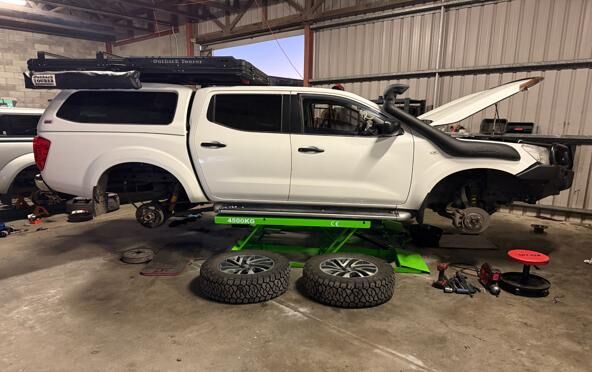
Inside our Calliope workshop.
Scan data linked with practical testing
Electrical and mechanical expertise together
Findings and next steps explained
Investigate the fault that is affecting your vehicle
Modern control modules, wiring, sensors and mechanical components work together. The useful test is the one that helps explain the symptom, so diagnosis is matched to the affected system, vehicle history and operating conditions.
Engine warnings and poor performance
Check-engine and reduced-power warnings, rough running, hesitation, misfires, smoke and power loss. Scan information is assessed alongside fuel, air-intake, ignition and mechanical conditions as required by the symptoms and findings.
No-starts and charging concerns
Hard starting, intermittent no-starts, battery discharge and low-voltage faults can cross several systems. Battery, starter, charging, wiring, fuel, immobiliser and engine condition may need investigation to establish why it will not run reliably.
Electronic brake and stability warnings can involve sensors, signals, wiring or connected mechanical components. We use the recorded information with relevant circuit and physical checks to determine where further testing or repairs are needed.
Transmission and control faults
Transmission warnings, limp mode and changed shifting behaviour can require electrical and mechanical assessment. Control information, live readings, power supply and related vehicle behaviour help guide the diagnostic path.
Diesel, boost and emissions concerns
DPF, EGR, boost, airflow and fuel-pressure faults, including symptoms that appear under load. Our diesel capability supports investigation where electronic evidence points towards air, fuel, cooling or a mechanical cause.
Sensor and actuator faults, damaged connectors, poor earths and communication problems between control modules. A qualified auto electrician can investigate voltage, current, signals and control circuits alongside the scan results.
Turn the fault information into a useful repair decision
Follow the code to the cause
A diagnostic code records a system, circuit or operating condition outside its expected range. The component named may be faulty, but wiring damage, low voltage, a poor connection, an air or exhaust leak, incorrect fuel pressure or another sensor can produce a similar result.
For a sensor-related warning, the investigation may include its power supply, earth, signal and the conditions it is measuring. A mechanical problem can also affect the reading. By checking those connections, we can narrow the cause and explain why a repair is being recommended before significant components are replaced.
Combine scan data with the vehicle in front of us
Testing can begin with battery condition and system voltage, scanning relevant modules and recording fault information. Freeze-frame data helps show the conditions when a fault was recorded, while live readings allow the team to compare what the systems are doing during the assessment.
Wiring, connectors, hoses, power supplies, earths, signals and control circuits can then be inspected and tested. If the evidence points beyond the circuit, mechanical checks may include compression, fuel, intake or cooling-system assessment. Road testing or further checks may be needed to connect the data with the behaviour you have reported.
Intermittent faults need the right conditions
A vehicle may behave normally until it is hot, wet, vibrating over a particular road or working under load. An intermittent problem can take time to reproduce safely, and some faults leave limited evidence once the symptom clears. The history you provide is therefore part of the investigation.
Tell us when the fault started, whether it happens cold or hot, and any recent repairs or modifications. Photos or videos of dashboard messages can help. We explain what the tests have established and discuss further investigation when the cause is still uncertain, rather than making a parts recommendation without enough support.
From diagnosis to the work needed
Once the cause and scope are confirmed, many repairs can continue through the same business. Total Mobile Mechanical Services combines auto-electrical, mechanical, diesel, cooling-system and air-conditioning capability, helping coordinate a fault that involves more than one trade.
The findings, repair priorities and next practical step are explained before substantial additional work proceeds. After an approved repair, relevant operation is checked. If more testing or a different repair arrangement is required, we explain why and what it means for the vehicle.
Cars, 4WDs, utes and vans can be assessed for drivability, warning lights, ABS, transmission, charging and electrical problems. Truck and commercial work includes electronic engine faults, starting, charging, lighting, wiring and breakdown-related concerns. Mixed fleets and selected machinery can also be assessed with the vehicle type and job scope confirmed when booking.
Caravan and RV work covers 12V, batteries, charging, solar, brake controllers, lights and connected towing faults. Those bookings are directed to our Calliope workshop and dedicated caravan yard. Tell us about the tow vehicle and equipment fitted so relevant connected systems can be considered.
Workshop testing and suitable breakdown assessment
The workshop is usually the right setting for advanced diagnosis. Stable power, specialist equipment and access to repair facilities support intermittent-fault testing, wiring access, mechanical checks and extended investigation. Our main workshop is in Calliope.
On-site fault finding is supported by our breakdown ute and fully equipped mobile workshop. The ute handles urgent callouts, while the workshop supports planned diagnostics and repairs at your location. Visit our mobile workshop and breakdown service for coverage and extended site visits.
Have the make, model, engine type and current symptoms ready when you call. Tell us about any parts already replaced, tests completed elsewhere and whether the problem is constant or comes and goes. Explain what changes when it occurs, including power, starting, gear changes or other electrical functions.
For a no-start, describe whether the engine cranks and whether there were warning messages before it stopped. If the vehicle cannot be driven safely, say so at the first call. We can then plan the appropriate starting point for assessment.
A clear testing and repair process
Describe the fault
Call 0456 765 135 with the vehicle, symptoms, recent work and the conditions that bring the problem on.
Test and explain
Scan information, circuit tests and mechanical checks are combined as needed. We discuss the findings and any further investigation required.
Agree the next step
Understand the repair scope and priorities before additional work proceeds, with relevant operation checked after approved repairs.
Gladstone, Calliope and surrounds.
Vehicle diagnostics for Gladstone, Calliope and surrounds, including Boyne Island, Tannum Sands, Mount Larcom, Benaraby and Miriam Vale. Our main workshop is at 6 Wright Road, Calliope QLD 4680. Suitable mobile breakdown assessment can be discussed for vehicles that cannot be driven.
Vehicle diagnostic questions
Can a warning light be investigated before parts are replaced?
Yes. The purpose of diagnosis is to test the relevant system and establish a sensible repair recommendation. Stored codes guide the work alongside circuit and mechanical evidence.
Can you find faults that only happen sometimes?
Often, but testing may need more time or the right conditions to reproduce them. Describe temperatures, load, rain and driving conditions, and bring any photos or videos of warning messages.
Can you diagnose a vehicle that will not start?
Yes. Checks may involve the battery, starter, charging, wiring, fuel, ignition, immobiliser, sensors or engine condition. Suitable mobile assessment may be available when it cannot be driven.
Can the repair continue after diagnosis?
In many cases, yes. Our mechanical, auto-electrical, diesel, cooling and air-conditioning capability supports the repair once the cause and scope are confirmed. We explain the appropriate next step.
Get a clear starting point for the repair.
Call Total Mobile Mechanical Services on 0456 765 135 for warning-light diagnosis, a no-start assessment or an unexplained performance problem. Tell us what happens and we will help organise the testing.